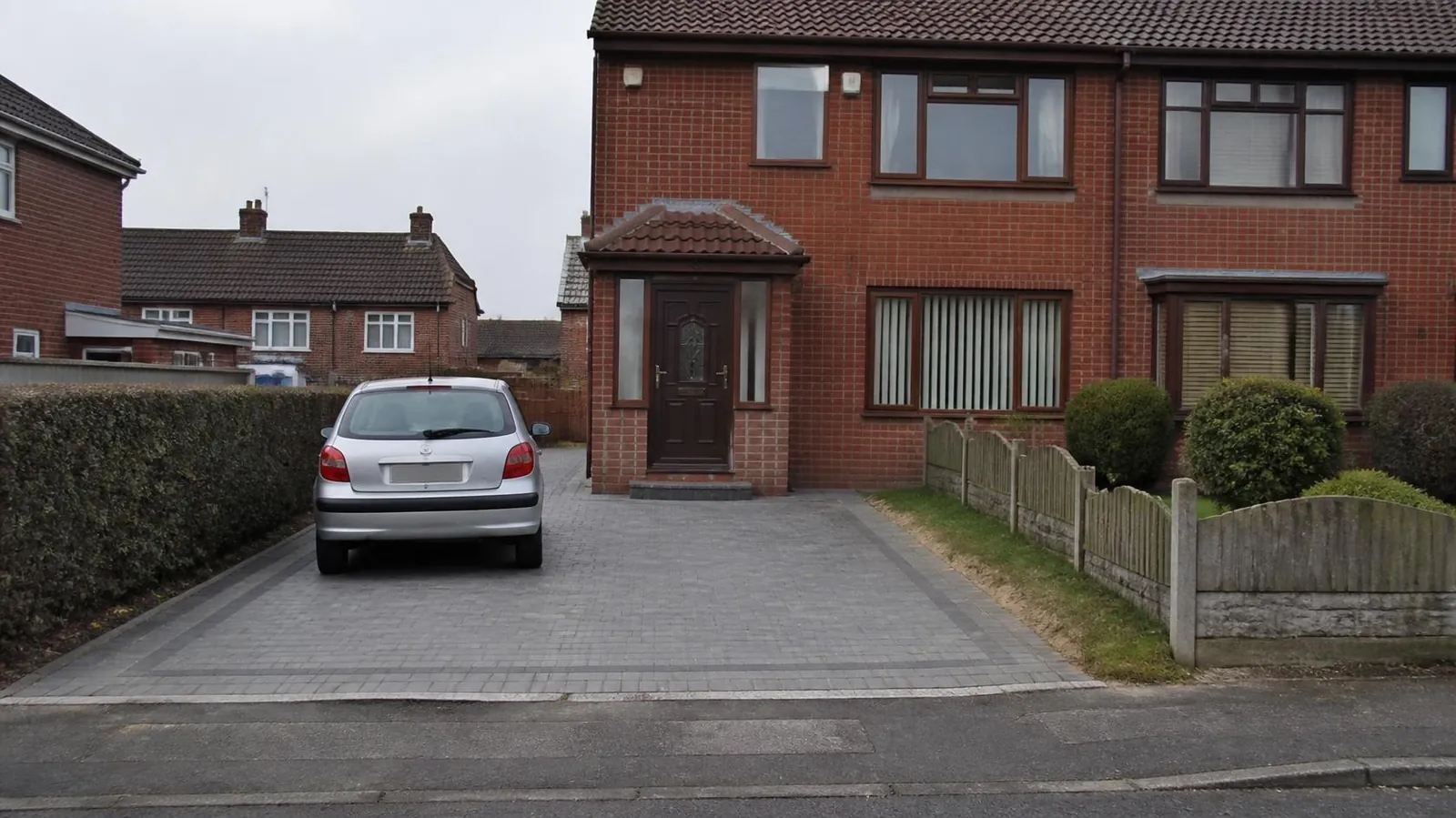
Bishopsgarth homes and drives
Bishopsgarth shares a ward with Elm Tree. At the 2021 Census the Bishopsgarth and Elm Tree ward had 2,913 households: 43% detached, 35% semi-detached, 12% terraced and 9% flats. About 78% were owner-occupied, 37% of households had two or more cars or vans, and 19% had none. That is a much higher share of detached houses than in neighbouring Hardwick or Roseworth.
The area sits west of Stockton town in the TS19 postcode district. Darlington Lane and Darlington Back Lane run along the south, Harrowgate Lane and High Newham Road to the north and east. Several street names follow a church theme, including Bishops Way and Cathedral Drive, alongside closes such as Bothal Drive, Burwell Drive and Brundall Close. Outwood Academy Bishopsgarth and Hardwick Green Primary Academy are nearby. Bishopsgarth Beck and Elmtree Beck run through the green corridors between the estates.
Typical Bishopsgarth situations:
- Detached houses with an integral or attached garage and a single drive that owners want widened to take two cars side by side.
- Open-plan frontages, with lawns running to the footpath and no front wall, so the shape of the extension is easy to change but needs neat edging.
- Original concrete or tarmac drives that have cracked, sunk or stained.
- Corner plots with longer frontages and more choice about where the crossing goes.
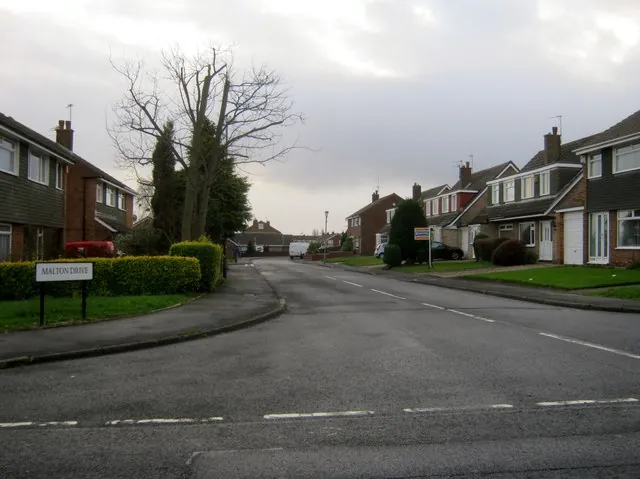
Sand, gravel and the becks
The British Geological Survey maps much of Bishopsgarth on glaciofluvial deposits, sand and gravel laid down by glacial meltwater, over Sherwood Sandstone. That is better-draining ground than the clay under much of Stockton, and it can make a permeable drive or soakaway work well. The deposits vary, though, and nearby Elm Tree and Hardwick are on clay till, so test the ground before relying on a soakaway.
The Environment Agency's flood map shows central Bishopsgarth in Flood Zone 1, with no river flood zone within about 300 metres. Bishopsgarth Beck and Elmtree Beck have their own narrow corridors. If your garden backs onto one, check your postcode on the flood map and keep any new drive falling away from the house.
Rules and dropped kerbs in Bishopsgarth
There is no conservation area in Bishopsgarth, so normal householder rules apply:
- A new or extended drive in a front garden does not need planning permission if it is permeable or drains to a lawn, border or soakaway on your land.
- More than five square metres of hard surface draining onto the road does need permission.
- Some estate deeds include covenants about open-plan frontages. Check yours before adding walls or gates.
Widening the crossing. Stockton-on-Tees Borough Council handles dropped kerbs in two ways: apply online for the council to assess the site, quote and build it, or use a private contractor holding the council's Opening Up licence. There is no published fixed fee. The council considers visibility, junctions, street trees, lamp posts and whether cars can park clear of the footway. Apply before widening the drive. See our dropped kerbs page.
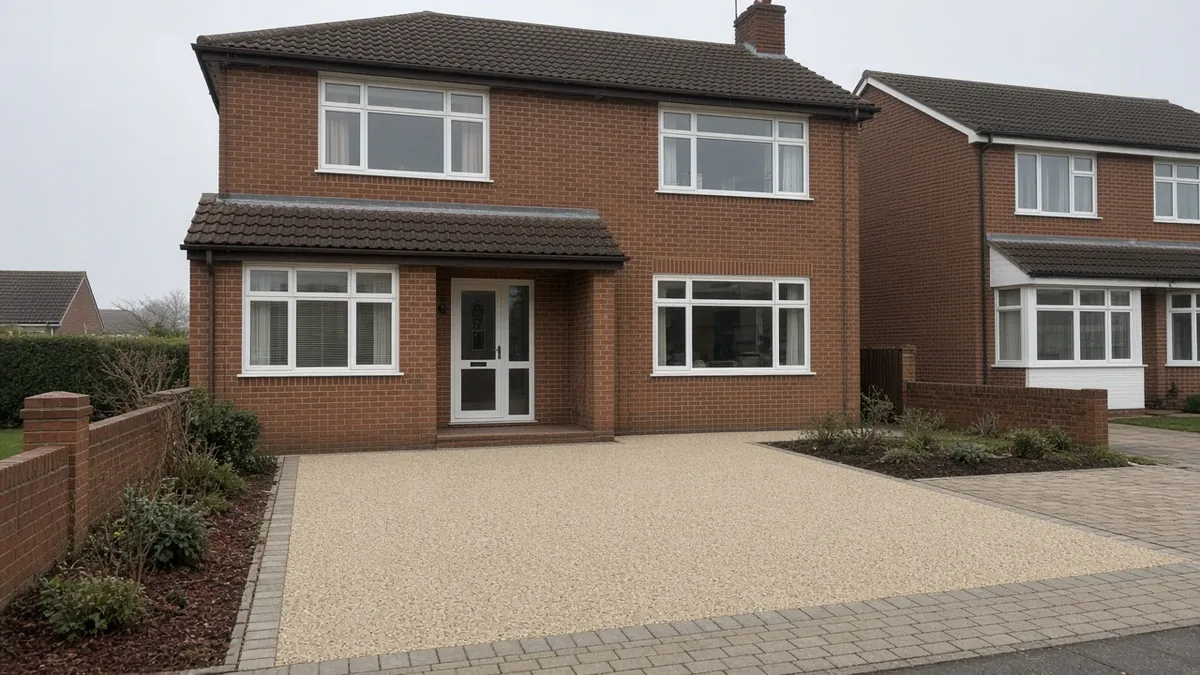
Common Bishopsgarth projects
Two kinds of work suit Bishopsgarth's detached houses and semis best:
Widening a detached house's drive to a double, adding about 20m² of new paving alongside the old. The new strip has to sit at the same level and drain the same way, and the dropped kerb usually needs widening too.
Replacing a full drive and turning area, about 50m². This is the chance to fix a tired base, swap to a permeable surface and add a soakaway if the old drive has always held puddles.
Breaking out old concrete, a soakaway, edging along open lawns and the crossing are what move a Bishopsgarth quote most. Larger areas usually bring the rate per square metre down a little, because the set-up is shared across more ground.
On sandier Bishopsgarth ground, resin bound on an open-graded base drains well. Block paving is easy to extend later. See our permeable driveways guide for how the front-garden rule works.
Nearby areas
- Elm Tree: the other half of the same ward to the south-east, on clay till with more semis.
- Hardwick: to the north-east, with more terraces and rented homes and front gardens that often lack a drive.
- Fairfield: to the south, mostly owner-occupied semis built between the wars and after.
All areas are on our areas page.
Questions people ask in Bishopsgarth
Can I widen my drive in Bishopsgarth without planning permission?
Usually yes, on a house, if the new surface is permeable or drains to your garden. Bishopsgarth has no conservation area. Check your deeds for open-plan covenants, and apply to Stockton-on-Tees Borough Council if the dropped kerb needs widening.
Is Bishopsgarth's ground good for a permeable drive?
Often. The British Geological Survey maps much of Bishopsgarth on glacial sand and gravel, which drains better than clay. It varies within short distances, so a simple soakage test before you commit is sensible.
Does Bishopsgarth Beck cause flooding?
Central Bishopsgarth is in Flood Zone 1 on the Environment Agency map. The becks have their own corridors, so if you back onto one, check your postcode and keep the drive sloping away from the house.
What does widening to a double involve in Bishopsgarth?
Usually about 20m² of new paving matched to the existing drive, a wider dropped kerb approved by Stockton-on-Tees Borough Council, and a plan for drainage. We measure up and give you a fixed price for the whole job.
Sources: ONS Census 2021, Bishopsgarth and Elm Tree ward (TS044, TS045, TS054 via Nomis); BGS Geology Viewer, 1:50,000; Environment Agency flood map for planning; OpenStreetMap (road, school and watercourse names); Stockton-on-Tees Borough Council: apply for a driveway crossing; GOV.UK: permeable surfacing of front gardens.